LVP and laminate
LVP or laminate for a rental? Compare the whole job
The price on a box does not tell you what a rental’s new floor will cost. Removal, subfloor work, door clearances and transitions can change the job as much as the material itself. Compare LVP and laminate using the same rooms, conditions and written scope.
Describe how the property is used
Tell us whether this is a long-term rental, a furnished unit or a home being prepared for sale. Explain the expected traffic, pets, furniture and turnaround window. These details help narrow the choices without assuming one material is right for every Miami property.
For a condo, get the building’s flooring and sound-control requirements before choosing a product. An underlayment advertised for one purpose is not automatically accepted by your association or compatible with every flooring system.
Compare the exact products
“LVP” and “laminate” each cover many products. Keep the manufacturer, collection, installation instructions and warranty with the estimate. Ask which rooms and conditions the selected product allows. A broad water-resistance claim should not be treated as permission to ignore leaks or wet conditions underneath.
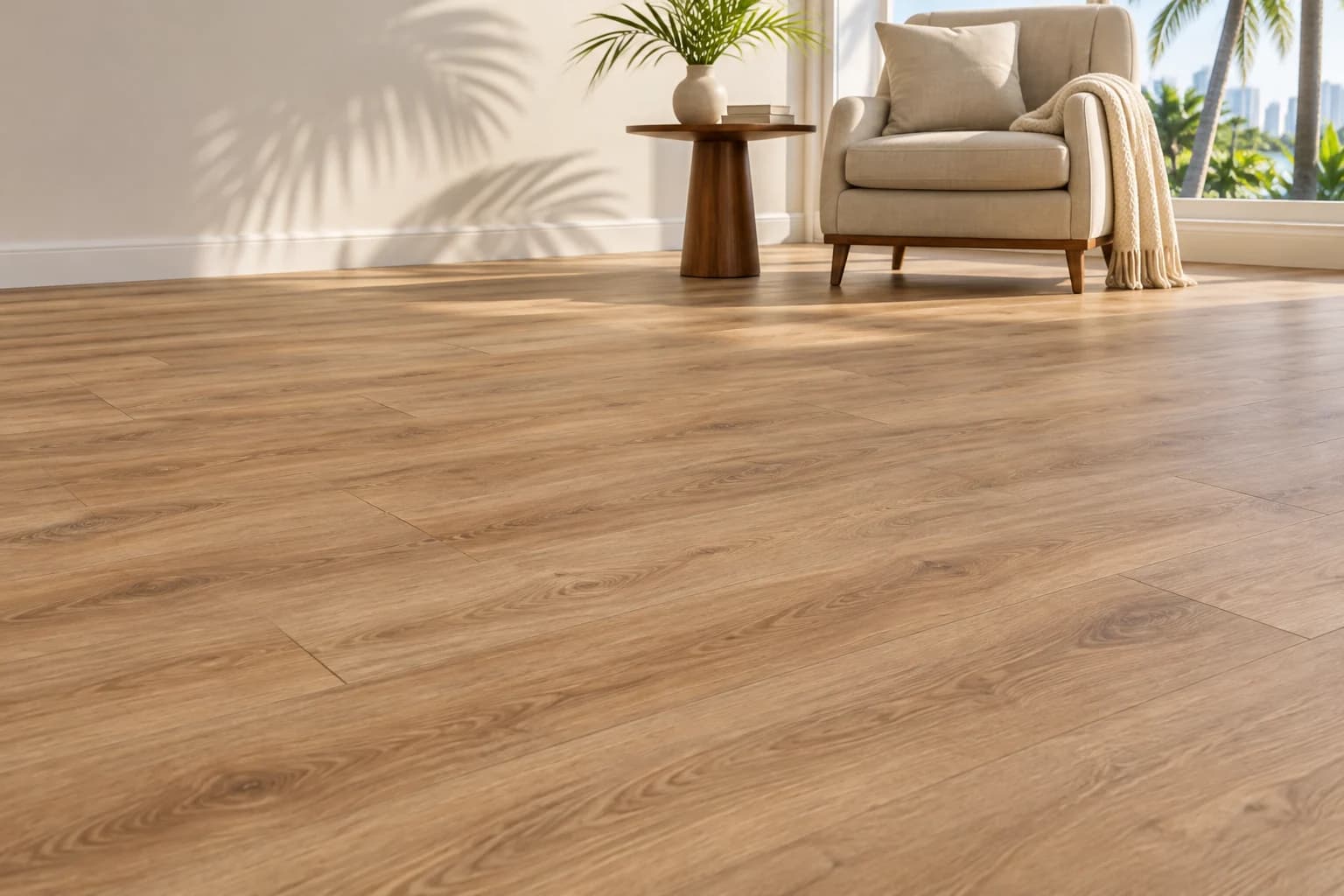
Compare sample appearance in the actual room. Look at the finish, edges and pattern repeat from standing height, with the lighting you normally use. Keep spare material planning in the conversation rather than assuming a matching box will be available years later.
Find out what the existing floor is hiding
Send photos of the current floor, loose areas, damaged edges and transitions. Tell us about known leaks or uneven spots. Ask what removal is included and how the subfloor will be evaluated against the chosen product’s requirements.
Flatness, moisture and the condition of the base need a product-specific plan. Do not assume an attached pad eliminates preparation. If the condition cannot be known until removal, ask how extra work will be documented, priced and approved.
Include the small edges of the job
List closets, hallways, stairs, doorway transitions and areas beneath appliances. Ask what happens to baseboards, shoe molding and doors. These details can make two material quotes look similar while covering different installation work.
Discuss furniture moving, debris removal and access. In an occupied rental, agree on where belongings go and which rooms remain usable. For a vacant unit, coordinate keys, building hours and the next tenant’s arrival.
Ask for a like-for-like comparison
Have both options describe the same area and responsibilities. Request the proposed material, installation method, preparation allowance and exclusions in writing. If one option requires a different schedule or additional work, make that difference visible before deciding.
- Exact product and approved application, not just “vinyl” or “laminate”.
- Removal, disposal, subfloor assessment and approval of hidden work.
- Trim, transitions, doors and furniture responsibilities.
- Building approvals, work dates and conditions for returning rooms to use.